
Unlock the Bold Flavors of Teriyaki Salmon!
Welcome to the vibrant world of Teriyaki Salmon! If you’re looking to elevate your weeknight dinners with a dish that’s not only delicious but also packed with nutritional benefits, you’re in the right place. This recipe transforms tender salmon fillets into a culinary masterpiece, glazed with a rich, savory teriyaki sauce. In this article, we’ll explore every facet of this dish, from the essential ingredients to expert tips and serving suggestions. Let’s dive into creating your new favorite meal!
Why You’ll Love This Recipe
- Quick and Easy: Perfect for busy weeknights, this teriyaki salmon can be on your table in under 30 minutes.
- Flavor-Packed: The combination of sweet and savory flavors in the teriyaki sauce makes this dish irresistibly delicious.
- Nutrient-Dense: Salmon is rich in omega-3 fatty acids, providing heart-healthy fats and essential nutrients.
- Customizable: Easily adaptable with various vegetables or side dishes to suit your taste.
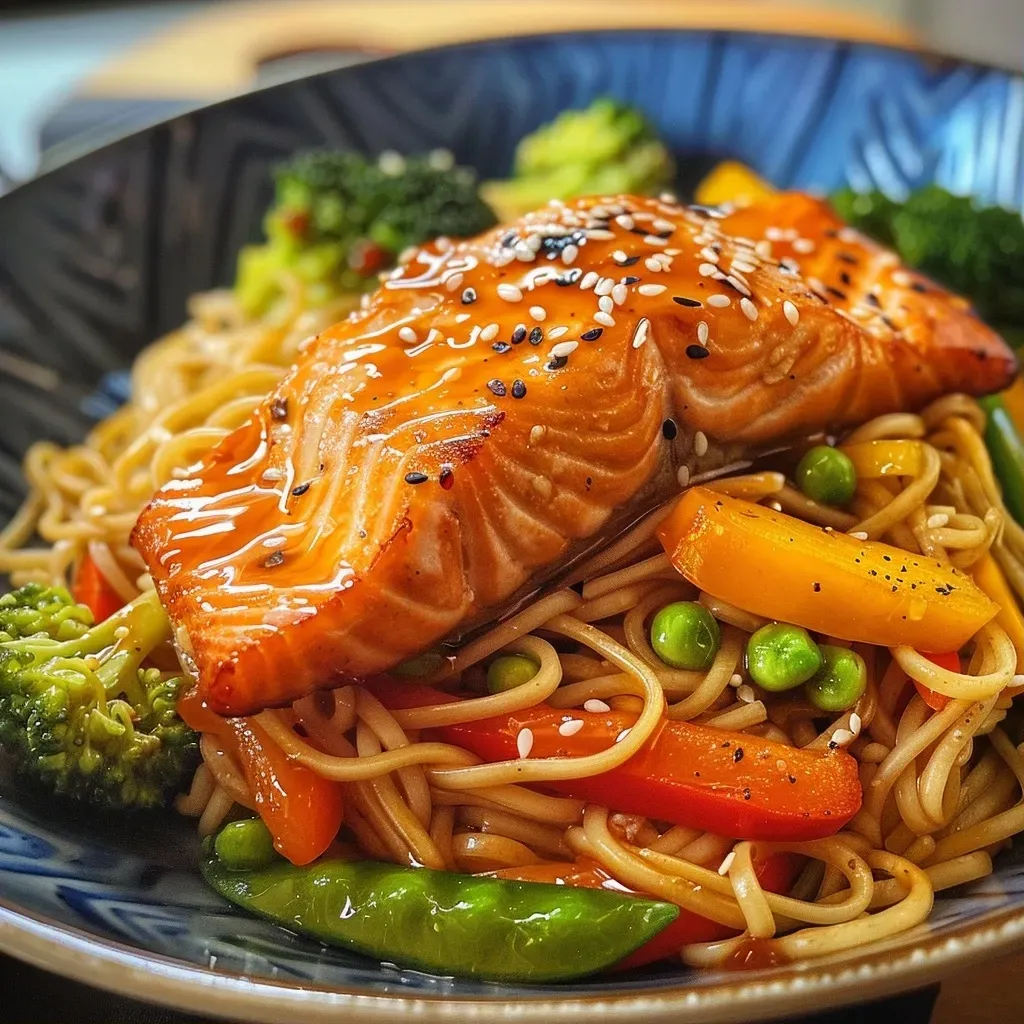
- Impressive Presentation: The glossy teriyaki glaze and vibrant veggies make this dish look as good as it tastes!
Ingredient Breakdown
To create the perfect teriyaki salmon, it’s all about the right ingredients. Here’s what you need:
- Salmon fillets: Use skin-on, boneless fillets for the best results. They cook beautifully and have great flavor.
- Soy sauce: Opt for Japanese koikuchi shoyu for authenticity; it’s darker and richer than regular soy sauce.
- Mirin: This sweet rice wine adds depth to the sauce. If you don’t have mirin, a mix of sake and sugar can work as a substitute.
- Sake: Adds a unique flavor. If unavailable, use dry white wine instead.
- Sugar: Balances out the savory notes and helps caramelize the glaze.
- Potato starch: Dusting the salmon with this helps create a crispy skin when pan-frying.
- Vegetables: Fresh spinach and asparagus complement the salmon beautifully, adding color and nutrition.
- Rice: Serve with fluffy short-grain rice for an authentic Japanese touch!
Substitution Ideas
If you’re missing an ingredient, don’t fret! Here are some easy substitutions:
- Salmon: Any firm, fatty fish like trout or mackerel can be used.
- Soy sauce: Tamari is a great gluten-free option.
- Mirin: Honey diluted in water can serve as a sweetener.
- Sake: Use rice vinegar mixed with water if necessary.
- Vegetables: Feel free to swap in broccoli, bok choy, or snap peas for a different twist.
How to Make Your Teriyaki Salmon
Ready to cook? Follow these simple steps to create your delicious teriyaki salmon:
- Start by preparing your vegetables; wash and cut the spinach and asparagus.
- Make the teriyaki sauce by mixing soy sauce, mirin, sake, and sugar in a bowl.
- Pat the salmon fillets dry and season both sides with salt and pepper.
- Dust the fillets with potato starch to achieve a crispy texture.
- Heat a non-stick pan over medium heat, adding a bit of cooking oil.
- Place the salmon fillets skin-side down in the pan. Cook for about 4 minutes, or until the skin is golden and crispy.
- Flip the salmon and cook for an additional 2 minutes.
- Pour the teriyaki sauce over the salmon, ensuring they are well coated.
- Let the sauce thicken for a minute before removing from heat.
- Serve the salmon over rice with the vegetables on the side, drizzling any remaining sauce over the top.
Pro Tips for Perfect Teriyaki Salmon
- Use fresh ingredients: The quality of your salmon and veggies can make a huge difference in taste.
- Don’t overcrowd the pan: Give the salmon space to cook evenly and develop a crispy skin.
- Let the sauce thicken: Allow the teriyaki sauce to cook down for a richer flavor.
- Garnish creatively: Try topping with sesame seeds or green onions for an extra crunch and freshness.
- Watch the cooking time: Overcooking salmon can lead to a dry texture; aim for a slight translucence in the center.
- Experiment with flavors: Add ginger or garlic to the teriyaki sauce for an extra layer of flavor.
- Use a meat thermometer: Salmon is perfectly cooked at an internal temperature of 145°F (63°C).
- Make it a meal: Pair with a fresh salad or miso soup for a complete dining experience.
Common Mistakes and Troubleshooting
Here are some common pitfalls to avoid while making teriyaki salmon:
- Overcooking the salmon: Remove from heat as soon as it reaches the desired doneness to prevent dryness.
- Too much sauce: Use just enough to coat the salmon; excess can make the dish too salty.
- Not enough seasoning: Ensure you season the salmon adequately before cooking for maximum flavor.
- Skipping the starch: Don’t skip dusting the salmon with potato starch; it’s key for achieving a crispy skin.
- Ignoring the resting time: Letting the salmon rest after cooking allows the juices to redistribute.
Variations to Try
Feel free to mix things up by trying these variations:
- Spicy Teriyaki Salmon: Add a splash of sriracha or chili flakes to the teriyaki sauce for a kick.
- Miso Glaze: Swap out the soy sauce for miso paste for a different flavor profile.
- Teriyaki Salmon Bowl: Assemble a rice bowl with salmon, veggies, and your favorite toppings like avocado and edamame.
- Grilled Teriyaki Salmon: Grill the salmon instead of pan-frying for a smoky flavor.
Storage and Meal Prep
If you’re planning ahead, here’s how to store and prep your teriyaki salmon:
- Refrigeration: Store any leftovers in an airtight container in the fridge for up to 3 days.
- Freezing: You can freeze cooked salmon for up to 2 months. Thaw in the refrigerator before reheating.
- Meal Prep: Prepare the teriyaki sauce ahead of time and marinate the salmon for extra flavor.
- Reheating: Gently reheat in the microwave or on the stovetop to avoid drying out the fish.
Comprehensive FAQ
Here are some frequently asked questions about teriyaki salmon:
- Can I use other fish for teriyaki? Yes! Try trout, mackerel, or even tofu for a vegetarian option.
- What sides go well with teriyaki salmon? Rice, steamed vegetables, or a fresh salad pair wonderfully.
- How can I make it gluten-free? Use tamari instead of soy sauce and ensure your other ingredients are gluten-free.
- Is teriyaki salmon healthy? Absolutely! It’s rich in omega-3 fatty acids and packed with nutrients.
- Can I make teriyaki sauce in advance? Yes, homemade teriyaki sauce can be stored in the fridge for up to a week.
- How do I know when the salmon is done? The salmon should be opaque and flake easily with a fork when fully cooked.
- Can I grill teriyaki salmon? Definitely! Just be sure to watch it closely to prevent it from drying out.
- What’s the best way to serve teriyaki salmon? Serve on a bed of rice with sautéed vegetables and drizzle with extra sauce for flavor.
Nutrition Tips and Dietary Adaptations
Here are some nutritional insights and adaptations for different diets:
- Protein-packed: Salmon is an excellent source of protein, making it perfect for muscle recovery.
- Low-carb option: Serve with cauliflower rice for a low-carb twist.
- Heart-healthy: The omega-3s in salmon contribute to heart health and reduce inflammation.
- Vegetarian adaptation: Replace salmon with marinated tofu or tempeh for a plant-based version.
- Kid-friendly: Serve with sweet teriyaki sauce to appeal to younger palates.
Equipment Recommendations
To make the perfect teriyaki salmon, you’ll need a few essential tools:
- Non-stick skillet: A non-stick pan is ideal for achieving that crispy skin.
- Measuring cups and spoons: For precise ingredient measurements, ensuring you get the flavors just right.
- Spatula: A good spatula helps flip the salmon without breaking it apart.
- Mixing bowls: For preparing the sauce and marinating the salmon.
Serving Suggestions
Make your teriyaki salmon even more delightful with these serving ideas:
- Top it off: Garnish with chopped green onions and sesame seeds to enhance presentation.
- Serve with sides: Pair with steamed broccoli or a fresh cucumber salad for a balanced meal.
- Add a sauce: Drizzle with extra teriyaki sauce or a sprinkle of lemon juice for brightness.
- Make it a feast: Serve alongside miso soup and pickled vegetables for an authentic Japanese experience.
Now that you’ve got the inside scoop on creating the ultimate Teriyaki Salmon, it’s time to get cooking! This dish is not just a meal; it’s an experience that brings joy and flavor to your table. Remember, cooking is about experimenting and enjoying the process, so don’t hesitate to make it your own. Happy cooking!
Pan Fried Japanese Teriyaki Salmon
Ingredients
Vegetables
- 100 g Oriental spinach (or baby spinach) (washed and blanched)
- 100 g asparagus (pencil asparagus, or green beans) (stir-fried with spinach)
Sauces & Seasonings
- 1.5 tbsp Japanese soy sauce (koikuchi shoyu)
- 1.5 tbsp mirin
- 1.5 tbsp sake
- 1 tsp sugar
Main Protein
- 2-4 fillets salmon fillets (skin-on, boneless, about 2 cm / ¾ in thick)
- 1 tbsp potato starch (katakuriko) (or cornstarch)
- 1 tbsp cooking oil (neutral)
Garnishes & Extras
- toasted white sesame seeds toasted white sesame seeds (optional garnish)
- finely chopped green onions green onions (optional garnish)
Rice
- 2 portions cooked Japanese short-grain rice (or Calrose)
Instructions
- Blanch spinach in boiling salted water in stages, then cool in ice water and set aside.
- Mix soy sauce, mirin, sake, and sugar to make teriyaki sauce; set aside.
- Pat salmon dry, coat with potato starch, and pan-fry skin-side down until crispy (~4 min). Flip and cook 2 min, then add sauce and coat.
- Stir-fry asparagus and spinach in butter with salt and pepper until tender, then serve over rice with salmon and sauce. Garnish with sesame seeds and green onions.


