Discover the Ultimate Korean Beef Bibimbap Bowl
Welcome to the vibrant world of Korean cuisine! If you’re looking for a dish that brings together flavor, nutrition, and a stunning presentation, then you’ve found it in this Korean Beef Bibimbap Bowl. Packed with fresh veggies, tender marinated beef, and the unforgettable kick of gochujang, this bowl is not just a meal; it’s a celebration on your plate! Let’s dive into why this dish should be your go-to for busy weeknights or weekend gatherings.
Why You’ll Love This Recipe
- Flavor Explosion: Each bite delivers a delightful mix of savory, sweet, and spicy—perfect for satisfying your taste buds.
- Quick & Easy: With minimal prep and cooking time, this recipe fits perfectly into your busy lifestyle.
- Customizable: You can easily adapt the ingredients to suit your dietary preferences or what you have on hand.
- Nutrient-Packed: This bowl is filled with a variety of vegetables, providing essential vitamins and minerals.
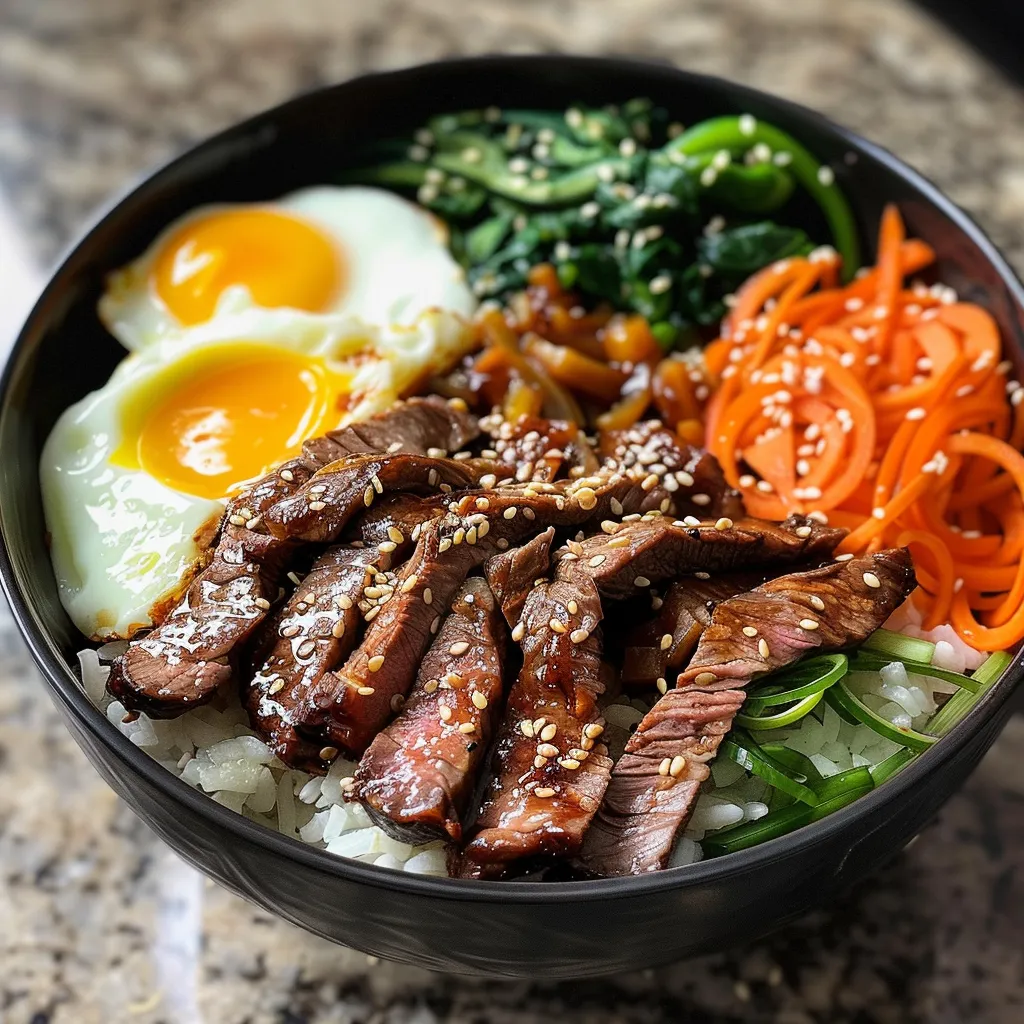
- Impressive Presentation: The colorful arrangement of ingredients makes for a beautiful dish that’s sure to impress guests.
Essential Ingredients Breakdown
Here’s what you’ll need to create your own Korean Beef Bibimbap Bowl:
- 350g sirloin or rib-eye steak: Thinly sliced for optimal marination and tenderness. Substitute with chicken or tofu for a different protein.
- 3 tablespoons soy sauce: This adds depth and umami flavor. Use tamari for a gluten-free option.
- 2 tablespoons sesame oil: Imparts a nutty flavor. Olive oil can be a substitute, but the taste will vary.
- 1 tablespoon brown sugar: Balances the savory flavors. Honey or maple syrup can work as alternatives.
- 2 cloves garlic, minced: Fresh garlic adds a punch. Garlic powder can be a substitute, but fresh is best!
- 1 teaspoon fresh ginger, grated: Offers a zesty kick. Ground ginger may be used in a pinch.
- 1/4 teaspoon black pepper: For seasoning. Feel free to use white pepper for a milder taste.
- 300g short-grain or sushi rice: This is key for the right texture; however, jasmine rice is a good alternative.
- 4 large free-range eggs: Fried sunny-side up to top off your bowl. You can use scrambled eggs or a vegan alternative.
- Toasted sesame seeds: For garnish, adding a crunch and visual appeal.
- 2 spring onions, finely sliced: Freshness and color, perfect for a finishing touch.
- 150g fresh spinach: Packed with nutrients. Kale or Swiss chard can be used instead.
- 150g beansprouts: Adds crunch and texture. You can swap them for shredded cabbage.
- 2 medium carrots: Julienned for a pop of color and sweetness. Try zucchini or bell peppers if you prefer.
- 1 medium courgette: Julienned to match the carrots. You can also use bell pepper.
- 100g shiitake mushrooms: Sliced for their rich flavor. Any mushrooms will work as a substitute.
- 1-2 tablespoons vegetable oil: For cooking. Canola or peanut oil are suitable alternatives.
- 4 tablespoons gochujang: The star of this dish—spicy and savory! Adjust to taste.
- 1 tablespoon rice vinegar: Adds acidity, balancing the rich flavors.
- 1 tablespoon sugar or honey: Complements the gochujang’s heat.
- 1 tablespoon water: To thin out the sauce.
- 1 clove garlic, minced: For the bibimbap sauce.
Pro Tips for Perfect Bibimbap
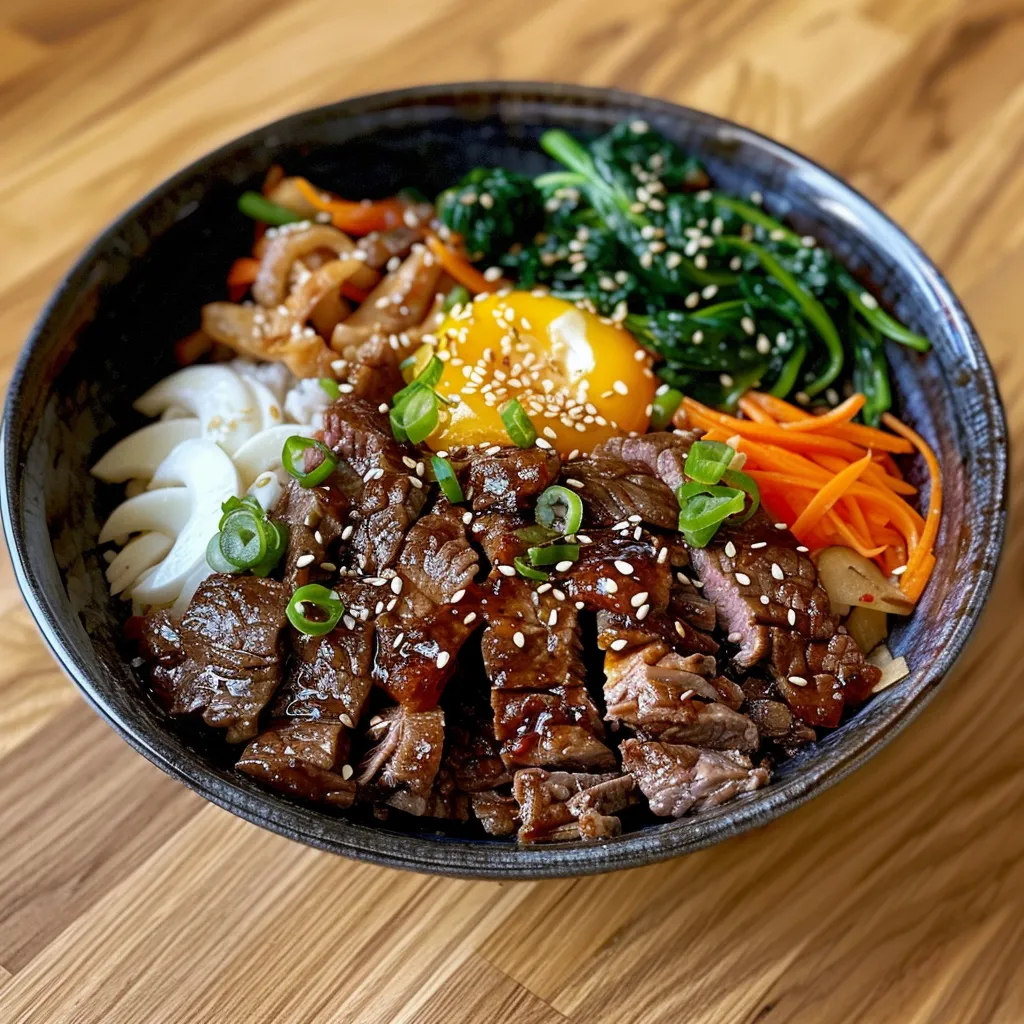
- Marination Magic: For maximum flavor, let the beef marinate for at least 30 minutes but up to overnight for an even richer taste.
- Rice Rinse: Rinse your rice multiple times until the water runs clear to remove excess starch and achieve fluffy grains.
- Vegetable Prep: Cut all your vegetables uniformly to ensure even cooking and a beautiful presentation.
- High Heat Cooking: Use high heat for stir-frying to get that perfect sear on your beef and veggies.
- Egg Perfection: Cook your eggs in a hot, non-stick pan to prevent sticking and achieve that beautiful golden yolk.
- Garnish Generously: Don’t skimp on the sesame seeds and spring onions—they add flavor and make your bowl visually stunning!
- Sauce it Up: Drizzle the bibimbap sauce generously over your assembled bowl for that ultimate flavor.
- Serving Style: Serve the bowl straight away, allowing each person to mix their ingredients together for a fun, interactive meal.
Avoiding Common Mistakes
- Overcooking Vegetables: Keep them crisp by stir-frying just until tender; they should still have a vibrant color.
- Ignoring Rice Quality: Use short-grain rice for the best texture; long-grain varieties can lead to a gummy bowl.
- Under-seasoning: Taste as you go! Adjust the flavors of your sauce and beef to your liking.
- Skipping the Sauce: The bibimbap sauce is essential! Don’t omit it; it ties all the flavors together.
- Not Mixing Enough: Encourage everyone to mix their bowls thoroughly before eating to enjoy all the flavors in every bite.
Delicious Variations to Try
- Vegetarian Version: Replace the beef with marinated tofu or tempeh, and add more veggies for a satisfying meal.
- Spicy Twist: Add extra gochujang or a sprinkle of chili flakes to amp up the heat!
- Seafood Delight: Swap the beef for shrimp or octopus for a seafood-inspired bibimbap.
- Breakfast Bibimbap: Top with scrambled eggs instead of fried eggs for a hearty breakfast twist.
Storage & Make-Ahead Instructions
This dish can be prepared in advance! Here’s how:
- Meal Prep: Cook your rice, marinate, and cook your beef and veggies ahead of time. Store them separately in the fridge for up to 3 days.
- Assemble Fresh: When ready to eat, reheat the rice and beef, then quickly sauté the veggies to serve hot.
- Freezing Tips: You can freeze the marinated beef (raw) for up to 3 months. Just thaw and cook when you’re ready!
Frequently Asked Questions
- Can I make bibimbap without gochujang? Yes! Try using sriracha or a homemade spicy sauce instead.
- What’s the best rice for bibimbap? Short-grain rice is traditional, but you can use jasmine or brown rice for a healthier option.
- How do I make it vegan? Substitute the beef with tofu or tempeh, and use a vegan egg replacement or skip the egg altogether.
- Can I use leftover vegetables? Absolutely! This dish is perfect for using up any veggies you have in your fridge.
- What’s a good side dish? Serve with kimchi or a light cucumber salad for a refreshing contrast.
- How spicy is bibimbap? The spice level depends on how much gochujang you use. Start with less if you’re sensitive to heat!
- Can I make the sauce ahead of time? Yes, the bibimbap sauce can be prepared and stored in the fridge for up to a week.
- How do I reheat leftovers? Microwave or stir-fry quickly on the stove to heat everything evenly.
Nutritional Tips & Dietary Adaptations
This recipe is naturally nutritious but can be adjusted further:
- Protein Boost: Add edamame or chickpeas for extra protein and fiber.
- Low-Carb Option: Use cauliflower rice instead of traditional rice to lower the carb count.
- Gluten-Free: Ensure all sauces are gluten-free and use tamari instead of soy sauce.
- Healthy Fats: Consider adding avocado slices for creaminess and a healthy fat boost.
Essential Equipment for Bibimbap
Here’s what you’ll need to make this dish:
- Non-Stick Pan: Ideal for frying eggs and sautéing vegetables without sticking.
- Rice Cooker: Makes cooking rice effortless and perfectly fluffy.
- Sharp Knife: For finely slicing vegetables and meat.
- Mixing Bowls: For marinating beef and mixing the bibimbap sauce.
Serving Suggestions
To serve your Korean Beef Bibimbap Bowl:
- Individual Bowls: Divide rice and toppings into individual bowls for a beautiful presentation.
- Family Style: Serve everything on the table and let everyone assemble their own bowls.
- Condiments: Provide extra gochujang on the side for those who want more heat.
Wrap it all up with your favorite drink, and you’ve got an unforgettable meal that’s sure to please everyone at the table. Now, get into that kitchen and whip up your own colorful Korean Beef Bibimbap Bowl—your taste buds will thank you!
Korean Beef Bibimbap Bowl
Ingredients
Meat and Marinade
- 350 g sirloin or rib-eye steak, very thinly sliced
- 3 tablespoons soy sauce
- 2 tablespoons sesame oil
- 1 tablespoon brown sugar
- 2 cloves garlic, minced
- 1 teaspoon fresh ginger, grated
- 0.25 teaspoon black pepper
Rice and Vegetables
- 300 g short-grain or sushi rice
- 150 g fresh spinach
- 150 g beansprouts
- 2 medium carrots, peeled and julienned
- 1 medium courgette, julienned
- 100 g shiitake mushrooms, sliced
- 1-2 tablespoons vegetable oil, for cooking
Sauce and Garnishes
- 4 tablespoons gochujang (Korean chilli paste)
- 1 tablespoon rice vinegar
- 1 tablespoon sugar or honey
- 1 tablespoon water
- 1 clove garlic, minced
Instructions
- Cook rice until tender, then fluff and keep warm.
- Marinate beef in soy, sesame oil, sugar, garlic, ginger, and pepper for 30 minutes.
- Blanch spinach and beansprouts briefly, then toss with sesame oil and salt.
- Stir-fry carrots, courgette, and mushrooms separately; set aside.
- Cook marinated beef quickly over high heat until caramelized; fry eggs sunny-side up.
- Assemble bowls with rice, vegetables, beef, and egg; garnish with sesame seeds and spring onions. Serve with sauce.